Knitting and Crochet

Knitting and crochet. None of this knitting vs. crochet. I am going to admit, I used to be team knit even after I took up crochet and learned how to do a proper granny square. You would find me firmly in the knit corner. I had to defend the craft because in my knitting group, most everyone crochet and very few of us knew how to do both. I had to be a defender of the faithful.

But, I must also admit there are things about crochet that make it better than I thought it was. I can now live comfortably with both and recently, I have been doing so much crochet that I was elated when I finally had a knit hat to make. It was a pleasure having needles in my hands again.

Knitting will always be with me. For the most part, the end result is much more impressive in knit than crochet. But for those who may be interested in one or the other, there are some differences worth noting:

Knitting uses two to five needles to create fabric by forming a series of interlocking loops. It creates timeless and timely pieces that are instantly classic and trendy.

Pros:

  1. Smooth, stretchy fabric: Knitting creates a finer, more elastic fabric that’s perfect for garments like sweaters, socks, and hats.
  2. Pattern variety: With techniques like cables, lace, and colorwork, knitting allows for intricate designs that are visually stunning.
  3. Efficient use of yarn: Knitting tends to use less yarn than crochet for comparable projects, making it great for larger items like blankets.

Cons:

  1. Complexity of fixing mistakes: Dropping a stitch can lead to frustration, as fixing errors can require skill and patience.
  2. Time-intensive: Knitting, especially for larger projects, can be slower than crochet.
  3. Less sturdy: The delicate loops in knitting can stretch out more over time compared to crochet.

Crochet is done with a single hook, creating a fabric by pulling loops through one another. Its unique construction makes it ideal for certain textures and projects.

Pros:

  1. Faster progress: Crochet often works up faster, making it a great choice for quick projects like scarves, baby blankets, or home decor.
  2. Easier to fix mistakes: Frogging (unraveling stitches) is simpler, and you’re less likely to drop loops.
  3. Sturdy fabric: Crochet creates a thicker, more robust fabric, ideal for bags, rugs, and amigurumi (crocheted toys).

Cons:

  1. Yarn usage: Crochet generally requires more yarn than knitting for similar-sized projects.
  2. Less elasticity: While crochet is sturdy, it can lack the stretch and drape that knitting offers.
  3. Fewer patterns for garments: While crochet garment patterns exist, they’re less common and often bulkier than knitted pieces.

Knowing how to do both has increased my love of this creative skill and knowing I can change to either one with whatever I am making, is gratifying in so many ways. I don’t know how to determine which one is better for anyone else to learn and I cannot imagine not doing both. I can crochet everything I knit but I cannot knit everything I crochet, at least it would take more work for me to translate. Luckily, I don’t have to. I get to enjoy both!

Do you have a preference? Want to learn one or the other? Leave comments and share!

10 Crochet Essentials


10 crochet essentials. If you want to learn how to crochet or improve that skill, these are things you will need to know.

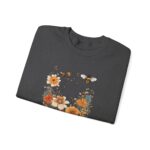
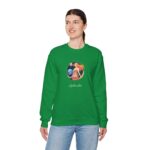
But first, before we get into the nuts and bolts of those essentials, I want to take a moment to show the latest addition to Abbey & Lincoln, the Flowers and Bees sweatshirt. It’s a cozy short, 100% cotton and perfect for gardeners, nature lovers and flower enthusiasts. It’s available in the shop right now in a multiple of sizes and colors.

Now, let’s talk crochet.

I admit: I still like knitting better. I find I am doing more and more crochet projects because crochet is faster and the movement is more artistic, but I like the looks of the end result better when it’s knit. But crochet is still growing on me. Most of the people in my knit group crochet and as I continue to do more of it and hear people say they want to learn how to do it, the more this list became necessary. So, if you want to jump on the knitting bandwagon, here are some ‘good to knows.’

Slip Knot and Foundation Chain

You are either going to start your project with a slip knot or a magic loop (more on that later.)

The slip knot is where it all begins. It’s the starting loop on your hook and the foundation of every crochet project. The foundation chain is the first row of chain stitches that anchors your work. Mastering a uniform chain tension will set you up for success in your project.

Tips:

  • Practice making your chain loose and even, as it will help the rest of your stitches stay consistent.

Let me say for the record that I hate calling a stitch a chain. The entire thing is a chain, the individual things are stitches. So when the instructions say ‘chain 6’. I’m ok with that. When they say place your hook in the second chain, there is no second chain; there’s a second stitch. Putting away my soap box now.

Single Crochet (SC)

The single crochet is one of the simplest stitches but also one of the most versatile. It creates a dense, textured fabric and is commonly used in amigurumi, scarves, and blankets. Single crochet is often the first stitch beginners learn and is a foundation for more advanced stitches.

Tips:

  • Keep your tension relaxed to avoid making stitches too tight.
  • Single crochet is great for creating solid pieces without holes.

. Half Double Crochet (HDC)

The half double crochet stitch (my personal favorite) strikes a balance between the height of a single and double crochet. It creates a thicker fabric with a bit more drape than single crochet, making it ideal for sweaters, hats, and cozy scarves.

Tips:

  • The extra yarn-over in half double crochet adds height to your stitch, so use it when you want a less dense fabric but still good coverage.

Double Crochet (DC)

Double crochet is a taller stitch that creates a looser, more open fabric. This stitch is perfect for airy garments, lightweight blankets, and projects where you want to work up rows quickly.

Tips:

  • Double crochet is ideal for lacy patterns and blankets that need more drape.

Treble Crochet (TR)

The treble (or triple) crochet stitch is the tallest basic stitch. It produces an open fabric and adds height, making it perfect for lacy designs, shawls, and scarves.

Tips:

  • This stitch is great for creating open, airy patterns. But be careful with tension, as it can get too loose.

Magic Ring (Magic Circle)

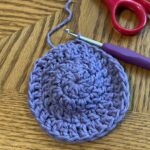
The magic ring is a technique used for starting projects in the round, like hats, amigurumi, and doilies. Unlike a foundation chain, the magic ring allows you to pull the loop tight, leaving no gap in the center of your work.

Tips:

  • Practice pulling the ring tight to avoid gaps in the center of your circle.
  • Use this technique to create a more polished look for round projects.

Increasing and Decreasing

Increasing adds stitches to your row or round, while decreasing removes stitches. Mastering these techniques opens the door to shaping garments, hats, and intricate designs.

Tips:

  • To increase, simply add two stitches in one stitch space.
  • For decreasing, crochet two stitches together to reduce stitch count gradually.

Front and Back Post Stitches

Front and back post stitches add texture and dimension to your work by working around the post (vertical part) of a stitch rather than into the top loops. These techniques are commonly used for creating ribbing, cables, and basketweave textures.

Tips:

  • Experiment with these stitches to add texture to blankets, sweaters, or home decor items.
  • These stitches can be a bit tricky at first but add a lot of dimension to your projects.

Color Changing

Adding color changes adds life and creativity to your projects. Mastering this technique allows you to create patterns, stripes, and even pictures within your work.

Tips:

  • Make color changes at the last yarn-over of the previous stitch for seamless transitions.
  • Weave in loose ends as you go to keep the back of your work tidy.

Blocking

Blocking is the finishing technique that makes your work look professional and polished. It involves wetting or steaming your piece and shaping it to the correct size and shape. Blocking helps stitches relax, and it’s essential for projects like lace shawls and garments.

Tips:

  • Use rust-proof pins and a blocking mat for best results.
  • For delicate yarns, steam blocking is often gentler than wet blocking.

 If I were to add one more, it would be gauge. I don’t often pay attention to gauge because it really isn’t essential with what I make. I can even make hats and disregard gauge. But if you’re make more fitted garments, this becomes important to the sizing is correct.

There you have it, the things you need to know to have hours of relaxing and productive fun with crochet!


So, You Want to Learn to Knit

So you want to learn to knit.  OK, this post isn’t going to teach you how but you can consider it a preliminary class on what you will need to get to that knitting place. 
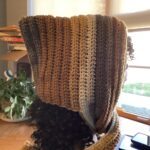
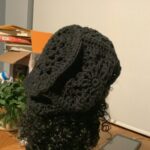
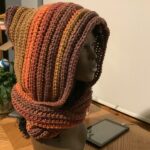
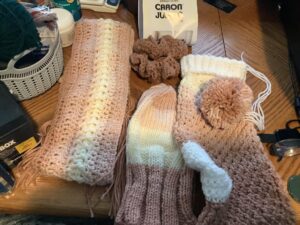
But first, you will notice the photo is crochet. And you would be right. They’re the latest hooded scarves. Just wanted you to know there were others out there and already in the shop. Now, on to the knitting.
I take a knit or crochet project to work on when I do a craft show. One, there is always a lull and I might as well be productive and two, it shows I do the actual work. This always causes at least one person (more than one) to comment how they always wanted to learn how to knit or crochet because their mother, grandmother, great aunt, a friend of a friend’s second cousin once removed on her father’s side, knew how and they made gorgeous stuff and they should really pick it up again.

If this is you, and you want to get into knitting, I will go over some of the things you need to know. Knitting is fun, relaxing and productive. It is also a sport. As much as I would like to think absolutely everyone can learn to knit, not absolutely everyone can. But for those fortunate few (million) this is one of the greatest skills in the world.

First, the materials

There are things you will need in order to start any project:

Yarn (or some kind of fiber, let’s start with yarn) Acrylic is the most affordable or you can go to any of the natural fibers. Purely preference

Knitting needles – you can knit with two to five needles. Let’s start with two. The yarn label will give the recommended needle size. I suggest starting with bamboo needles as they don’t slip as much as metal ones.

Scissors – you will have to cut something

Tape measure

Yarn needle – you will need this to weave in the ends.

Stitch marker (optional but fun)
Row counter – which can be as simple as a pen and paper 

Knitting – Let’s start at the beginning

There are only two stitches in knitting: the knit stitch and the purl stitch. There are two other pseudo stitches: the yarn over and the slip stitch. Every pattern will use at least one of these. In order to start, you will have to cast on. Once you’re done with all the knitting and purling, you will then cast off.

 Casting on is the action that gets your first yarn onto your needles so you can work them. The two most common cast ons are the long tail cast on. There are other styles and you can learn them as you need them. But when you first learn, you will likely be taught one of those. There are dozens of YouTube videos that can show both methods. 

The Knit Stitch – Right handed knitters

This stitch is the foundation of knitting. To make a knit stitch, hold the needle with the cast-on stitches in your left hand and the empty needle in your right. Insert the right needle into the first stitch from left to right so the needle ends up behind the left needle, wrap the yarn around the right needle, and pull it through to create a new stitch on the right needle. Slide the old stitch off the left needle. Repeat this process until you’ve knitted all the stitches on the left needle.

The Purl Stitch:

This stitch is the complement to the knit stitch. With the needle in your left hand, insert the right needle into the first stitch from right to left so the right needle ends up in front of the left, wrap the yarn around the right needle, and pull it through to create a new stitch. Slide the old stitch off the left needle and repeat for each stitch on the row.

Binding Off:

Also called “casting off,” this technique finishes your knitting project and keeps the stitches from unraveling. To bind off, knit the first two stitches, then use the left needle to lift the first stitch over the second stitch and off the needle. Continue this process until one stitch remains. Cut the yarn, leaving a tail, and pull it through the last stitch.

Once you’re comfortable with the knit and purl stitches, you can start making simple patterns. Here are a few beginner-friendly patterns to try:

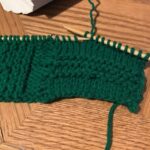
  • Garter Stitch: Knit every row. This creates a stretchy, bumpy texture that’s perfect for scarves and blankets.
  • Stockinette Stitch: Alternate between a row of knit stitches and a row of purl stitches. This creates a smooth, “V” pattern on one side and a bumpy texture on the other, often seen in sweaters and other garments.
  • Ribbing: This pattern is created by alternating knit and purl stitches in the same row. For example, a “2×2 rib” means knitting two stitches, then purling two stitches across the row. Ribbing is commonly used for cuffs and edges because it’s stretchy.

As with any new skill, learning to knit requires patience and practice. Here are some tips to help you along the way:

  • Start Small: Begin with small projects like a dishcloth or scarf. These projects are quick to finish and help you build confidence in your skills.
  • Watch Tutorials: Videos are incredibly helpful for beginners to see how to hold the needles, yarn, and how to execute each stitch. There are plenty of free tutorials available online.
  • Don’t Worry About Perfection: Mistakes are a part of the learning process. If you drop a stitch or knit one stitch incorrectly, don’t be discouraged. With practice, these mistakes will happen less frequently, and you’ll learn how to fix them.
  • Count Your Stitches: It’s easy to accidentally add or drop stitches, which can alter the shape of your project. After each row, quickly count your stitches to ensure you have the correct number.
  • Practice Tension: Consistent tension helps your stitches look even. New knitters often knit too tightly or too loosely. Try to keep your stitches loose enough to slide easily on the needle but tight enough to maintain a neat appearance.
  • Gauge: Somewhere along the line, you will learn about gauge. It is making sure the measurements of your piece are accurate. Not so important on somethings but very important on others.

When you finish knitting, it’s time to complete your project with a few finishing touches:

  • Bind Off: Use the binding off technique mentioned above to secure your stitches and give your project a clean edge.
  • Weave in the Ends: Use a tapestry needle to weave the loose ends of yarn into your project. This step not only makes your project look neat but also secures the ends so your knitting doesn’t unravel.
  • Blocking: This optional step can improve the appearance of your project, especially if you’ve made a lace or intricate pattern. To block, soak your project in water, gently squeeze out the excess, and pin it flat to dry. Blocking evens out stitches and can help your project hold its shape.

Explore Patterns and Projects

After mastering the basics, you’ll be ready to tackle more complex patterns. Here are a few project ideas to inspire you as you continue learning:

  • Scarves: Scarves are classic beginner projects. You can practice different stitch patterns and learn how changing yarn types affects the look and feel.
  • Hats: Hats introduce circular knitting and decreases, giving you a chance to expand your skills.
  • Blankets: A basic blanket with simple stitches is a great long-term project and provides plenty of practice.
  • Washcloths or Dishcloths: These small projects are excellent for practicing stitch patterns and make useful, eco-friendly items.

   Join the Knitting Community

One of the joys of knitting is becoming part of a welcoming community of fellow crafters. Many knitters join local knitting groups, online forums, or social media communities where they can share their projects, learn new techniques, and gain inspiration. Consider joining sites like Ravelry, where you can browse patterns, track your projects, and connect with other knitters around the world.
 

The Aphrodite Shirt – Revised

The Aphrodite Shirt – Revised. I decided to redo the graphic for the Aphrodite Shirt. (You can get it here.)

The election here is over and I think the entire nation was stunned. That’s about all I can say about it.

I’m getting ready for the show tomorrow. I have a few new items to add to the pile. Mostly hooded scarves. The show is in Gurnee and we did it last year and had a good time. It seems with each show, artists are required to give something for a raffle. I am going to print out a pattern and provide the yarn and needles or hook to make it. That seems like a good prize.

Sales are down this year and they were down last year and that is not the sign of good personal economy. We will see how things go tomorrow. We should have a lot of space for me to have two tables: one with the home stuff like towels and scrubbies and the other with the hats and scarves and headbands. I do have a $ amount in mind for success. It’s only $175. I think the highest price I have is $40 From what I’ve been reading, shows are touch and go. When they’re good, they’re very good and when they’re bad – well. 

I am going to be optimistic. These shows are almost always fun and it’s rare I don’t make anything. It’s from 9-3 so I will still have a big chunk of the day left. Hope springs eternal.

Cottage Core – The Book Lover Sweatshirt

Cottage Core – The Book Lover Sweatshirt

I love me a good bookstore. I used to go there and get books and those books might never get read. I am a member of a book club now and I’ve read more books in the past year that have nothing to do with knitting or crochet.

When I had to come up with a new idea for a shirt (and a tote bag and mug because…duh) I knew I had to give a nod to my re-ignited love of books. What is different about this one, though, is the graphic works better on a smaller scale. So, of course, I placed it by the heart. Like the other sweatshirts, it comes in 8 sizes and I think 10 colors and it’s unisex so that book lover can be anyone on your list! The Book Lover is available now right there at Abbey & Lincoln.

In knitting news, the afghan is almost done. I have just one more row of squares to add together. And there are two more on the hooks. I have orders to get out and the craft show is this weekend. I am hoping we can get in on Friday and set up. I have to go get the items out of storage and take inventory. I do have a few things to add and I am still working towards the December show where I want to have even more stuff. Pray for me. Though I feel I have been steadily working, I’m not sure I have as much as I should to show for it. Tomorrow is election day and I am working the day. Our precinct is usually slow. There are only about 550 people in it. I think we will have turnout about 40% while someone else said they think we will get about 100 for the whole day. I am curious about that because it will give me a clue perhaps about how people are reacting. The place I am in is decidedly red. We will see if they are motivated to get out. The weather is supposed to rainy but warm. That can be a factor but one that encourages instead of discourages. We shall see.

I hope you vote. I understand if you don’t. But I hope you do.